
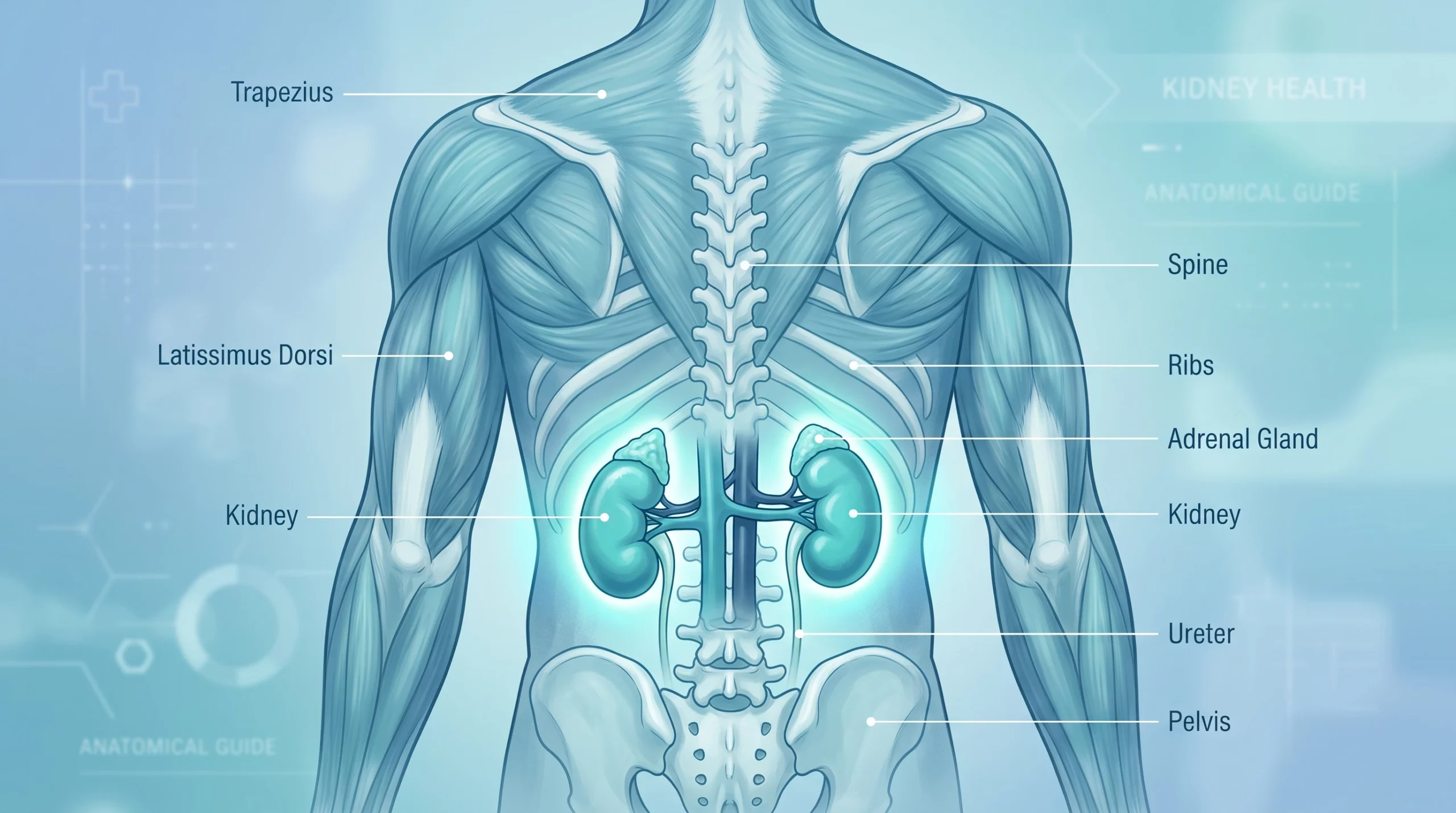
If you have a dull ache or sharp pain in your back or side, it is natural to wonder if it is coming from your kidneys. Kidney pain has a few key features that can help you tell it apart from ordinary muscle soreness or general back pain.
Where Do You Feel Kidney Pain?
Kidney pain is usually felt in your flank, which is the area on either side of your spine, just below your rib cage and above your hip. It often shows up on one side, though it can affect both sides at once. Some people also feel it wrap around toward the front, near the belly or groin.
What Does It Actually Feel Like?
People describe kidney pain in different ways depending on the cause. It can feel like:
- A constant, dull ache deep in your side or back
- A sharp, sudden, cramping pain that comes in waves, often linked to kidney stones
- Pain that does not change when you move, sit, or stretch, unlike typical muscle pain
- Pain paired with fever, nausea, or changes in urination
One helpful clue is movement. Muscle or joint pain often gets better or worse depending on your position. Kidney pain tends to stay steady no matter how you move.
Common Causes of Kidney Pain
Several conditions can cause kidney pain, including kidney stones, kidney infections, urinary tract blockages, and less commonly, kidney cysts. Each of these has its own pattern of symptoms, so a proper evaluation is the only way to know for sure what is happening.
Kidney Pain vs Back Pain
Back pain from muscles or joints usually worsens with certain movements, lifting, or long periods of sitting. Kidney pain tends to stay constant and is often paired with other symptoms such as fever, nausea, cloudy urine, or pain during urination. If you notice these additional symptoms alongside your back pain, it is worth mentioning to your provider.
When to Seek Medical Care
Reach out to a healthcare provider if your pain is severe, does not improve, or comes with fever, chills, vomiting, or blood in your urine. These symptoms deserve prompt evaluation.
Go to an emergency room right away if you have sudden, severe pain along with high fever, confusion, or you are unable to urinate at all. These can signal a serious problem that needs immediate attention.
How Associated Nephrology Consultants Can Help
Our team at Associated Nephrology Consultants specializes in identifying the true source of kidney related symptoms. We take time to listen, run the right tests, and create a care plan built around you. Patients throughout Maplewood and the greater Saint Paul, Minnesota area trust us for compassionate, expert kidney care.
This article is for general education and is not a substitute for medical advice. Please talk with a qualified healthcare provider about your specific symptoms.
Associated Nephrology Consultants (ANC)
1997 Sloan Place, Suite 17, Maplewood, MN 55117
Phone: 651-772-6251
Hours: Monday to Friday, 8:30 AM to 4:00 PM
Website: ancmn.com